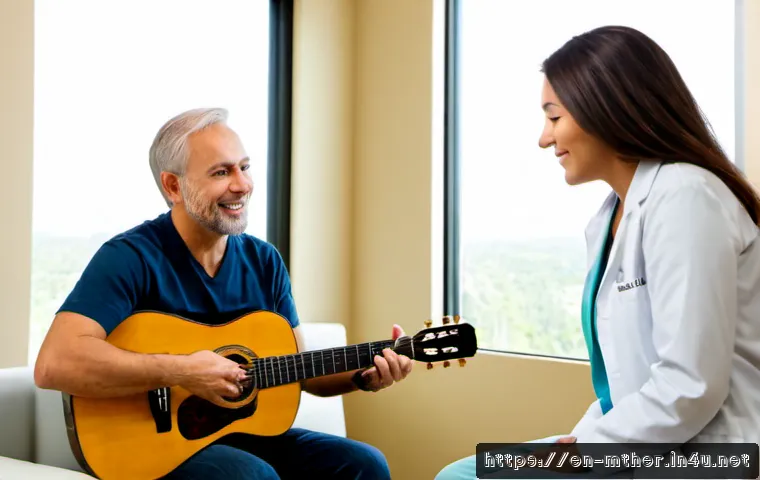
Oh, hey there! I’m so thrilled you’re here. As someone who’s spent years immersed in the incredible world of music therapy, I’ve seen firsthand the profound impact it has on people’s lives.
It’s truly amazing, isn’t it? But just like any field touching human well-being, the landscape of music therapy is constantly evolving. Staying at the top of our game, continuously honing our skills, and embracing new knowledge isn’t just a good idea—it’s absolutely essential to provide the best care possible.
From cutting-edge research in neuroscience uncovering deeper connections between music and the brain, to the exciting integration of technology like interactive apps in clinical practice, there are so many avenues to explore for professional growth.
We also have a responsibility to uphold the highest ethical standards and continually engage in continuing education to ensure our methods are always evidence-based and relevant.
I’ve personally experienced how investing in advanced training or even just joining a peer supervision group can completely transform your practice and confidence.
It’s about more than just earning credits; it’s about pushing boundaries and truly excelling. If you’re ready to elevate your impact and become an even more formidable force for healing through music, you’ve come to the right place.
We’re going to uncover some fantastic ways to do just that. Let’s accurately explore how we can strengthen our expertise together!
Oh, wow, it’s so fantastic to connect with you here! As music therapists, we’re always striving to make a real difference, aren’t we? I mean, who among us hasn’t felt that incredible rush when a client makes a breakthrough, sparked by the power of music?
That feeling is exactly what drives me to keep learning, growing, and refining my practice. Our field is just exploding with new insights and innovative approaches, and honestly, if we’re not staying curious and pushing our own boundaries, we’re not only doing ourselves a disservice, but we’re also limiting the profound healing we can offer.
It’s not just about earning those continuing education credits – though those are certainly important! – it’s about becoming a truly exceptional force for good, a therapist who can adapt, innovate, and connect on deeper levels than ever before.
Let’s explore some amazing avenues to truly level up our impact together!
Elevating Your Clinical Expertise: Mastering New Modalities

What I’ve truly come to appreciate over my years in music therapy is that while our foundational skills are rock-solid, the world of advanced therapeutic modalities offers an incredible depth that can transform our practice.
It’s like learning to cook with a basic recipe, then discovering a whole culinary world of spices and techniques that elevate every dish. I remember feeling a bit overwhelmed by all the options at first, thinking, “Do I really need *another* certification?” But honestly, diving into specific approaches like Guided Imagery and Music (GIM) or Neurologic Music Therapy (NMT) has been nothing short of revolutionary for my clients and for my own confidence.
These aren’t just fancy titles; they’re frameworks that give you a more precise lens through which to understand and respond to client needs. For instance, I’ve seen firsthand how incorporating GIM principles can help clients unlock profound insights and emotional processing that traditional talk therapy might take months to touch.
It’s a powerful experience, guiding someone through carefully selected music to access their inner world, and it takes specialized training to do it ethically and effectively.
Then there’s NMT, which taps directly into the brain’s responses to music. When I first started learning about it, I was blown away by the scientific rigor and the measurable outcomes it offers for individuals with neurological conditions.
It’s one thing to intuit that music helps with motor skills, but to understand the precise mechanisms and apply targeted techniques? That’s next-level impact, and it’s exhilarating.
It empowers you to articulate the “why” behind your interventions with such clarity, which not only impresses colleagues but also genuinely helps clients understand their own progress.
Expanding my clinical toolbox with these advanced methods didn’t just add techniques; it fundamentally reshaped my understanding of healing through music, allowing me to serve a broader range of complex needs with greater efficacy.
Diving Deeper into Specialized Approaches
It’s easy to feel like you’re doing a great job with the generalist approach, and for many clients, that’s absolutely true. But what I’ve found is that some of the most profound leaps in client progress come when you can offer a truly specialized hand.
Think about it: if you had a complex medical issue, you’d want a specialist, right? The same often applies in therapy. Exploring advanced modalities such as the Nordoff-Robbins approach, which centers on innate musicality and active music-making, offers an incredible way to engage clients, particularly those who might struggle with verbal communication.
It’s about meeting them in their musicality, finding that spark, and building from there. I’ve witnessed clients who were withdrawn or non-verbal begin to interact and express themselves through improvised musical dialogues – it’s truly a magical and deeply human connection.
Another area that really spoke to me was Analytical Music Therapy (AMT). This approach, rooted in psychodynamic principles, helps clients explore unconscious processes through musical improvisation.
It can be incredibly insightful, providing a non-verbal narrative to emotional experiences that are too complex or painful to put into words. When I first delved into AMT, I felt a whole new dimension open up in my sessions, allowing for richer, deeper therapeutic work.
These aren’t just extra tools; they’re entire philosophies of practice that, when mastered, can dramatically enhance your therapeutic presence and effectiveness.
It’s about committing to a path of continuous learning, recognizing that there’s always more to explore, more ways to connect, and more healing to facilitate.
The Neuroscience-Music Connection: A Powerful Alliance
Honestly, when I started my journey, the idea of integrating hardcore neuroscience into my music therapy practice felt a little daunting. I mean, I was drawn to music for its emotional and expressive power, not for brain scans and complex physiological responses!
But let me tell you, understanding the neuroscience behind why music works has been one of the most empowering shifts in my career. It’s like pulling back the curtain and seeing the intricate machinery at play.
When you can articulate how music literally rewires the brain for improved motor function, emotional regulation, or cognitive processing, you move from “I think this helps” to “I know this helps, and here’s why.” For instance, learning about how rhythmic entrainment can help Parkinson’s patients improve gait, or how certain melodic patterns can reduce anxiety by engaging specific neural pathways, has given me such a solid foundation.
It’s not just about the intuition of music anymore; it’s about applying evidence-based strategies that are rooted in a deep understanding of human physiology.
I’ve found that this knowledge not only strengthens my clinical interventions but also makes me a more credible and confident advocate for music therapy in interdisciplinary teams.
When you can speak the language of neurologists and other medical professionals, you open doors for collaboration and, ultimately, for more clients to access the incredible benefits of music therapy.
It’s about leveraging both the art and the science to create truly holistic and impactful care.
Harnessing the Digital Wave: Technology for Therapeutic Impact
Can we talk about how rapidly technology is changing everything? It’s wild! Just a few years ago, “technology in music therapy” might have meant using a CD player or a digital keyboard.
Today? We’re talking about virtual reality, AI-driven tools, and apps that can transform a session in ways we never imagined. And honestly, for a long time, I was a bit of a Luddite.
I loved my acoustic instruments, the tangible connection of physical music-making. But then I saw how a client, initially resistant to traditional instruments due to physical limitations, lit up when given an iPad with a music creation app.
It completely shifted my perspective. Embracing these tools isn’t about replacing human connection; it’s about *enhancing* it and *expanding* our reach.
It allows us to meet clients where they are, whether that’s in their homes via telehealth or by offering new avenues for expression that traditional methods might not provide.
The digital landscape offers so many exciting possibilities, from creating personalized soundscapes for relaxation to facilitating songwriting with clients who might never pick up a guitar but can tap out a beat on a screen.
It’s about being adaptable and creative, recognizing that the essence of music therapy isn’t tied to a specific instrument but to the therapeutic relationship and the power of sound.
I’ve learned that staying open to these advancements isn’t just a trend; it’s an essential part of evolving as a therapist and offering the best possible care in a rapidly changing world.
Interactive Apps and Virtual Realities: Expanding Our Reach
It’s truly mind-blowing to consider how far we’ve come with interactive apps and virtual reality in music therapy. I mean, imagine a client who struggles with social anxiety finding comfort and connection in a virtual group music session, or someone recovering from trauma using a VR headset to immerse themselves in a calming, music-filled natural environment.
I’ve personally experimented with various music creation apps like GarageBand, Incredibox, and even some lesser-known ones, and the engagement levels I’ve seen are incredible.
These tools democratize music-making, allowing clients with no prior musical experience to compose, improvise, and express themselves creatively without the pressure of traditional performance.
It empowers them to be the creators of their own therapeutic soundscapes. And VR? It’s still an emerging frontier, but the potential is enormous.
Imagine creating a custom, immersive musical experience tailored precisely to a client’s therapeutic goals – whether it’s managing pain, reducing anxiety, or exploring emotions in a safe, controlled digital space.
It’s about leveraging technology to create profound, multi-sensory experiences that were simply impossible just a few years ago. Of course, it’s crucial to integrate these tools thoughtfully and ethically, ensuring they serve the client’s needs rather than just being a novelty.
But when done right, they can open up entirely new dimensions of healing.
AI and Biofeedback: Precision in Practice
Now, this is where things get really cutting-edge and, frankly, fascinating. The integration of Artificial Intelligence (AI) and biofeedback into music therapy is still in its nascent stages, but the implications for precision and personalization are astounding.
I’ve been keeping a close eye on the research, and the idea that AI algorithms could analyze a client’s physiological responses to music – heart rate, skin conductance, brainwave patterns via neurofeedback – and then help tailor musical interventions in real-time is incredibly powerful.
Imagine having a tool that could help you fine-tune the tempo, melodic complexity, or harmonic content of music to optimize a client’s relaxation response or cognitive engagement in a live session.
It moves beyond intuition to an evidence-informed, almost data-driven approach, providing objective measures of how music is impacting their system. I know some therapists worry about technology replacing the human element, and I get that.
But I see AI not as a replacement for the therapist, but as an incredibly sophisticated assistant that can provide insights and adjustments that would be impossible for a human to track and process in real-time.
It’s about enhancing our ability to create truly personalized and effective therapeutic experiences, allowing us to delve even deeper into the unique needs of each individual.
Biofeedback, in particular, offers clients a tangible way to see how music is affecting their internal state, empowering them to learn self-regulation techniques in a powerful, embodied way.
It’s a game-changer for conditions like anxiety, chronic pain, and stress management, giving clients a sense of control and agency over their own healing journey.
The Indispensable Value of Connection: Mentorship and Peer Support
You know, I genuinely believe that no matter how many certifications we stack up or how many brilliant techniques we master, being a music therapist can sometimes feel incredibly isolating.
We hold space for so much, process deep emotions, and sometimes grapple with challenging client situations that no textbook could ever fully prepare us for.
That’s why, in my opinion, the value of robust peer connection and mentorship is truly indispensable. It’s not just a nice-to-have; it’s a lifeline. I still vividly remember a particular case that left me feeling utterly stuck, questioning my every move.
It wasn’t about a lack of knowledge, but a complex ethical dilemma interwoven with intense transference. Reaching out to my supervisor, who had decades more experience, provided not just a solution, but a profound sense of validation and renewed clarity.
They helped me see angles I’d missed, validated my emotional response, and guided me through a process that ultimately served my client far better than I could have alone.
This kind of professional relationship fosters resilience, prevents burnout, and ensures we’re continuously growing not just clinically, but personally too.
We’re in a field that demands so much of our empathy and presence, and having a safe space to process our experiences, brainstorm new ideas, and simply be heard by someone who “gets it” is absolutely paramount to a sustainable and thriving career.
Without these connections, I honestly think many of us would struggle to maintain the emotional fortitude and innovative spirit our profession demands.
Cultivating Growth Through Clinical Supervision
For any music therapist, new or seasoned, embracing clinical supervision is one of the most powerful commitments you can make to your professional self.
It’s truly a game-changer. I recall an early experience where I was convinced I was failing a client because progress felt so slow. My supervisor didn’t tell me what to do, but skillfully guided me to reflect on my own expectations, to notice subtle non-verbal cues I’d overlooked, and to explore alternative musical interventions.
That process wasn’t just about the client; it was about me developing a deeper sense of self-awareness and learning to trust my clinical instincts while still remaining open to external perspective.
Supervision provides a confidential, supportive, and often challenging space to unpack complex cases, explore countertransference, refine your techniques, and navigate ethical quandaries.
It’s where you get constructive feedback on your clinical work, not just in theory, but in the gritty, real-time dynamics of a session. Whether it’s individual or group supervision, the insights you gain are invaluable.
It helps you prevent compassion fatigue, process difficult emotions that inevitably arise from holding space for others’ pain, and ensures you’re continually upholding the highest standards of care.
It’s an investment in your mental health, your clinical acumen, and ultimately, in the well-being of your clients.
Building Your Tribe: Networking for Inspiration and Support
Beyond formal supervision, the power of a strong professional network simply cannot be overstated. I mean, where else can you bounce ideas off someone at 10 PM because you just had a lightbulb moment, or get advice on navigating a tricky administrative hurdle at your facility?
Attending conferences, joining professional associations, and participating in online forums aren’t just about collecting CMTEs; they’re about building your “tribe.” I’ve met some of my closest colleagues and collaborators at these events, people who share my passion but also bring wildly different perspectives and experiences.
These connections are a wellspring of inspiration, providing fresh ideas, different takes on challenging situations, and a sense of belonging that combats professional isolation.
It’s so much more than just exchanging business cards; it’s about forming genuine relationships with people who understand the unique joys and struggles of being a music therapist.
I’ve found that these informal mentorships and peer discussions often lead to innovative co-treatment opportunities, referrals, and a deeper sense of community within our diverse field.
It’s a space for celebrating successes, commiserating over setbacks, and collectively pushing the boundaries of what music therapy can achieve.
Charting Your Unique Path: Specializations and Advanced Credentials
Thinking about my journey, one of the most exciting shifts I’ve experienced has been moving beyond the generalist role to truly hone in on areas that ignite my passion and leverage my unique strengths.
It’s not about doing less, but about doing what you do even *better* and for the populations you feel most called to serve. This is where specializations and advanced credentials really shine.
When I first started, I thought I needed to be good at everything for everyone. But as I gained experience, I realized that my energy and impact were amplified when I focused on specific populations or therapeutic approaches that resonated deeply with me.
For example, some colleagues have found their calling in Neonatal Intensive Care Unit (NICU) music therapy, working with the most fragile infants to support development, while others dedicate themselves to hospice and palliative care, bringing comfort and dignity through music at life’s end.
These aren’t just niches; they’re entire worlds of specialized knowledge, specific ethical considerations, and unique clinical techniques. Pursuing advanced certifications, whether it’s in Neurologic Music Therapy (NMT) as I mentioned earlier, or Guided Imagery and Music (GIM), or even Dialectical Behavior Therapy (DBT)-informed music therapy, gives you a deeper, more refined skill set that can truly set you apart.
It demonstrates a commitment to excellence and a dedication to specific areas of practice that clients and employers genuinely value. It feels incredibly empowering to say, “This is my area of expertise,” and know that you’ve invested the time and effort to truly master it.
Unlocking Niche Expertise with Certifications
Beyond the foundational MT-BC credential, which is absolutely essential, there’s a whole universe of advanced certifications waiting to be explored. I remember feeling a mixture of excitement and trepidation when I considered pursuing an NMT certification.
It was a significant time commitment, but the rigorous training, the deep dive into neuroscientific principles, and the hands-on application completely transformed my understanding of how music impacts the brain.
The same goes for certifications in areas like Hospice and Palliative Care Music Therapy (HPMT), where the focus is on providing comfort, dignity, and a space for emotional processing at the end of life.
These programs don’t just teach you techniques; they immerse you in the specific ethical considerations, population-specific needs, and interdisciplinary team dynamics of that particular field.
They are incredibly rigorous, requiring not just theoretical knowledge but also supervised clinical hours that truly build confidence and competence. For me, gaining these specialized credentials wasn’t just about adding letters after my name; it was about truly deepening my ability to serve specific populations with a level of expertise that felt both personally fulfilling and clinically impactful.
It’s a journey of continuous learning that keeps the passion alive.
Finding Your Calling: Tailoring Your Practice

One of the most rewarding aspects of this career is the freedom to sculpt your practice to align with your deepest passions. It’s about figuring out where your unique talents and interests intersect with the world’s need for healing through music.
I’ve seen therapists who are incredibly skilled at working with adolescents, using songwriting as a powerful tool for self-expression and identity formation.
Others might specialize in early childhood development, leveraging music to foster communication and motor skills in young children. My own journey led me towards working with adults experiencing anxiety and trauma, and the process of tailoring my practice to this population, seeking out specialized training, and curating resources has been incredibly enriching.
It’s not just about what you *can* do, but what you *want* to do and where you feel you can make the most meaningful difference. This tailoring might involve seeking out specific internships, pursuing a graduate degree with a particular focus, or even developing your own unique model of practice based on a blend of approaches.
The key is to be intentional about your professional development, allowing your interests to guide you towards an area where you can truly excel and create a lasting impact.
Staying Ahead of the Curve: Research and Evidence-Based Evolution
Let’s be real, the world of music therapy is dynamic! What was cutting-edge five years ago might be foundational knowledge today, and new discoveries are constantly shaping our understanding of how music heals.
That’s why staying immersed in research and consistently grounding our practice in evidence is absolutely non-negotiable for me. I often hear colleagues say they don’t have time to read journals, and I totally get it – our days are packed!
But I’ve found that even dedicating a small amount of time each week to skimming abstracts, listening to research podcasts, or attending webinars can make a monumental difference.
It keeps my clinical decisions sharp, ensures I’m offering interventions that are genuinely effective, and honestly, it just makes me a more confident and informed practitioner.
I remember a time when I relied heavily on anecdotal evidence, which certainly has its place in building rapport and understanding individual experiences.
However, when I started integrating more rigorous research findings, I noticed a palpable shift in how I presented my work, how I collaborated with other healthcare professionals, and even how clients perceived the efficacy of our sessions.
It moved our beautiful art form into the realm of undeniable science, giving it the credibility it truly deserves. The field needs more of us to not just consume research, but to actively engage with it, question it, and even contribute to it.
From Lab to Lullaby: Bridging Research and Practice
Sometimes it feels like there’s a chasm between the ivory towers of academia and the bustling, often chaotic, reality of clinical practice. But I’ve learned that bridging this gap, transforming dense research papers into practical, actionable interventions, is where the real magic happens.
It’s about taking those fascinating findings on how music affects neurological pathways or emotional regulation and translating them into tangible experiences for our clients.
For instance, understanding a study on how specific rhythmic patterns can enhance motor control in stroke patients means I can confidently design a drumming intervention that is not only engaging but also scientifically supported.
I’ve personally found that attending workshops where researchers present their findings in a clinically relevant way is incredibly helpful. It’s one thing to read about biomarkers for music therapy effectiveness, but it’s another to discuss with the researchers themselves how these insights can inform your session planning.
It’s about constantly asking, “How can I take what we know works in a controlled environment and apply it effectively and compassionately in my unique clinical setting?” This constant back-and-forth between theory and practice is what makes our profession so vibrant and continuously evolving.
The Constant Pursuit of What Works Best
The truth is, our clients deserve the absolute best, and for me, that means never settling for “good enough.” The “constant pursuit of what works best” isn’t just a catchy phrase; it’s a fundamental ethical and professional commitment.
This involves not only staying updated on the latest evidence but also critically evaluating our own interventions. Are we seeing the outcomes we expect?
If not, what does the research suggest we could adapt or try next? I’ve found that reflecting on my practice through a research-informed lens helps me refine my techniques, tailor interventions more precisely, and ultimately achieve better results for my clients.
It’s about being a lifelong learner, recognizing that knowledge isn’t static. It’s about attending those specialized workshops, diving into a new journal article, or even participating in a research study yourself.
This dedication to continuous improvement ensures that as music therapy progresses as a field, our individual practices evolve with it, offering the most effective, compassionate, and scientifically sound care possible.
It’s an ongoing journey, and it’s one of the things that makes being a music therapist so incredibly rewarding.
Embodying Professional Integrity: Ethics and Self-Care
Okay, let’s talk about something that’s foundational to *everything* we do: professional integrity and, just as importantly, our own self-care. It’s a tough job, this music therapy gig, isn’t it?
We’re often privy to profound vulnerability, deep trauma, and complex emotional landscapes. The emotional demands can be intense, and frankly, if we’re not upholding the highest ethical standards *and* proactively taking care of ourselves, we risk not only our own well-being but also the very trust our clients place in us.
I’ve personally experienced moments where I felt completely drained, teetering on the edge of burnout, and it made me realize just how crucial it is to have solid ethical frameworks to lean on and robust self-care strategies in place.
It’s not selfish; it’s absolutely essential for maintaining the clarity, compassion, and presence that our clients need from us. Think of it this way: you can’t pour from an empty cup, right?
And when we’re running on empty, our judgment can be clouded, our empathy diminished, and our ability to navigate difficult ethical situations compromised.
My experience has shown me that ethical practice and self-care aren’t separate concepts; they’re deeply intertwined, forming the bedrock of a sustainable and impactful career in music therapy.
It’s about conscious choices every single day to be the best version of ourselves, both for our clients and for our own precious selves.
Navigating the Nuances of Ethical Practice
The American Music Therapy Association (AMTA) Code of Ethics isn’t just a document to skim; it’s a living guide that shapes every decision we make. I remember a particular situation early in my career where I was faced with a confidentiality dilemma involving a minor client and their family.
It wasn’t a clear-cut case, and I spent hours consulting the AMTA Code, reviewing ethical decision-making models, and discussing it with my supervisor.
That process, though challenging, solidified my understanding that ethical practice is rarely about simple rules. It’s about critical thinking, ongoing reflection, and a deep commitment to our core values like respecting dignity, acting with compassion, and demonstrating integrity.
We’re constantly navigating complex boundaries, informed consent, scope of practice, and cultural considerations. It takes courage to speak up when something doesn’t feel right, to admit when you’re unsure, and to actively seek consultation.
It’s about being accountable for our actions and continually evaluating how our interventions align with the best interests of our clients. This dedication to ethical excellence builds trust, not just with individual clients, but within the broader community, reinforcing music therapy’s reputation as a credible and responsible healthcare profession.
Protecting Your Well-being: Sustaining the Healer
Let’s be honest, it’s easy to preach self-care and much harder to practice it consistently, especially when you’re deeply invested in your clients’ well-being.
But over the years, I’ve learned that neglecting my own self-care isn’t a badge of honor; it’s a fast track to burnout and diminished effectiveness. I’ve seen wonderful therapists leave the field because they couldn’t sustain the emotional demands.
For me, “self-care” isn’t just bubble baths (though those are nice!); it’s about intentional practices that replenish my emotional, mental, and physical reserves.
This includes regular supervision where I can process difficult sessions without judgment, setting clear boundaries with clients and my workplace, engaging in my own creative outlets – making music just for *me* – and ensuring I have a life outside of work that brings me joy and connection.
Sometimes, it’s as simple as making sure I take a real lunch break, or stepping away from my computer at a reasonable hour. It’s also about building moral resilience, understanding that we will encounter difficult situations, and having strategies to cope with moral distress.
Embracing self-care isn’t selfish; it’s a professional imperative. It ensures that we show up for our clients as the best, most present, and most compassionate versions of ourselves, ready to offer the profound healing that only music therapy can provide.
It’s an ongoing journey of self-awareness and self-compassion, ensuring we can continue doing this incredibly meaningful work for the long haul.
| Area of Growth | Why It Matters for Your Practice | How to Get Started |
|---|---|---|
| Advanced Modalities (e.g., NMT, GIM) | Deepens understanding of specific client needs (neurological, psychological) and provides evidence-based frameworks for targeted interventions. Increases therapeutic precision and client outcomes. | Attend specialized training programs, pursue certifications, join study groups focused on a particular method. |
| Technology Integration (e.g., AI, VR, Apps) | Expands reach and accessibility, offers new avenues for client expression, enhances personalization, and provides objective data for treatment planning. | Explore online courses for digital music tools, experiment with music therapy apps, research emerging VR/AI applications, network with tech-savvy colleagues. |
| Clinical Supervision & Peer Support | Prevents burnout, provides a safe space for processing complex cases and ethical dilemmas, fosters self-awareness, and offers diverse perspectives for problem-solving. | Seek out an experienced supervisor, join a peer supervision group (in-person or online), actively participate in professional association forums. |
| Specialization & Niche Development | Allows for deeper expertise in specific populations or conditions, increases professional recognition, and aligns practice with personal passion and strengths. | Identify populations or areas that resonate with you, research specialized certifications (e.g., NICU, Hospice), seek out mentors in those fields. |
| Research & Evidence-Based Practice | Ensures interventions are effective and credible, strengthens advocacy for music therapy, informs clinical decision-making, and contributes to professional growth. | Subscribe to music therapy journals, attend research presentations at conferences, participate in webinars focused on evidence-based practice. |
| Ethical Reflection & Self-Care | Maintains professional integrity, safeguards client trust, prevents burnout, and ensures long-term sustainability and effectiveness as a therapist. | Regularly review professional codes of ethics, engage in reflective practice (journaling), establish clear boundaries, pursue personal creative outlets, seek own therapy/support. |
Wrapping Things Up
Whew! What a journey we’ve been on, exploring the incredible pathways to elevating our practice as music therapists. It’s truly exhilarating to think about the vast potential that lies before us, isn’t it? As I look back on my own path, I’m reminded that the heart of what we do—connecting with others through music—remains constant, but the ways we can deepen, refine, and expand that connection are always evolving. It’s about more than just keeping up; it’s about passionately pursuing excellence, nurturing our own well-being, and continually rediscovering the profound impact we can make.
Useful Information to Keep in Mind
1. Lifelong Learning is Your Superpower: Seriously, never stop being curious! The field of music therapy is constantly advancing, with new research and modalities emerging. Carving out even a little time each week to read a journal article, attend a webinar, or explore an advanced certification can truly transform your practice and keep your passion ignited. It’s about staying agile and responsive in a dynamic world.
2. Tech Isn’t the Enemy, It’s an Ally: I used to be so resistant, but digital tools, from intuitive music creation apps to groundbreaking AI and VR applications, can dramatically expand your therapeutic toolkit. They offer new avenues for expression, personalize interventions, and can even provide objective data to refine your treatment plans. Don’t be afraid to experiment – you might just unlock a whole new dimension of engagement for your clients.
3. Your Network is Your Net Worth (Professionally Speaking!): No therapist is an island! Actively seeking out quality clinical supervision, joining peer support groups, and engaging with professional associations are vital for preventing burnout, navigating ethical dilemmas, and sparking fresh ideas. These connections provide invaluable sounding boards and a sense of community that truly sustains you in this demanding but rewarding career.
4. Find Your Niche and Own It: While being a generalist is great, identifying specific populations or therapeutic approaches that deeply resonate with you can amplify your impact. Pursuing specialized certifications (like NMT or GIM) allows you to develop deeper expertise, making you an invaluable resource for specific client needs and distinguishing your practice. It’s about aligning your unique strengths with where you can make the most profound difference.
5. Prioritize Your Own Well-being Ruthlessly: This isn’t optional; it’s a professional imperative. We pour so much into our clients, and if we don’t actively replenish our own reserves through robust self-care practices – be it therapy for ourselves, creative outlets, or strict boundaries – we risk burnout and diminished effectiveness. Your ability to show up fully for your clients depends entirely on how well you care for yourself.
Key Takeaways
Alright, if there’s one thing I want you to walk away with, it’s this: your journey as a music therapist is an incredible, ever-unfolding adventure. It’s about blending the art of music with the science of healing, always pushing for deeper understanding, and continuously evolving to meet the complex needs of those we serve. Embrace continuous learning, lean into the power of technology, cultivate strong professional relationships, and absolutely, unequivocally, prioritize your own well-being. By doing so, you’re not just growing as a therapist; you’re fortifying your ability to deliver truly transformative care, making every note, every rhythm, and every shared moment a profound step towards healing and human connection. Let’s keep making beautiful music, both literally and figuratively, in the lives of our clients and in our own professional journeys.
Frequently Asked Questions (FAQ) 📖
Q: How can we, as music therapists, truly stay on top of the constant wave of new research and technological advancements without feeling completely overwhelmed?
A: Oh, I totally get this feeling! It sometimes feels like the world of music therapy is moving at lightning speed, doesn’t it? From groundbreaking neuroscience discoveries to incredible new interactive apps, there’s just so much happening.
What I’ve found personally effective, and what’s honestly transformed my practice, is a multi-pronged approach. First, you absolutely have to find a few key journals or research databases that speak to your niche and just subscribe.
Even if you only skim the abstracts each month, that little bit of exposure keeps you aware of what’s bubbling up. Beyond that, I swear by professional organizations.
Joining a good one, like the American Music Therapy Association or even more specialized groups, gives you access to webinars, conferences, and fantastic peer networks.
I remember attending a virtual symposium last year where I learned about a new AI-powered music generation tool that I’ve since started integrating into my sessions – it was a game-changer!
And honestly, don’t underestimate the power of social media for professional development. Following leading researchers and practitioners can offer daily doses of insight and spark new ideas.
It’s about consistent, bite-sized learning rather than trying to digest everything all at once. Trust me, finding your rhythm here makes all the difference.
Q: What are some really tangible, actionable steps we can take to truly elevate our clinical impact and maybe even carve out a unique space in the field? It feels like just doing the daily work isn’t enough anymore.
A: That’s a brilliant question, and it hits on something I’ve pondered a lot throughout my career. It’s true, simply showing up is a good start, but to truly thrive and make a deeper impact, we need to think bigger.
One of the most impactful things I’ve done is pursue advanced certifications in specific areas that genuinely called to me. For example, specializing in trauma-informed care or even developing expertise in working with a particular demographic, like adolescents with anxiety.
When you dive deep into one area, your confidence skyrockets, and your clients feel that specialized attention. Another thing that’s been incredibly rewarding is developing my own unique program or approach.
I once felt a little stuck, and after a lot of brainstorming, I designed a group drumming protocol for stress reduction that became incredibly popular in my community.
It wasn’t just about the music; it was about the intention and structure I brought to it. And here’s a secret: peer supervision groups are gold. Bouncing ideas off other experienced therapists, getting constructive feedback, and sharing those ‘aha!’ moments can completely reshape your perspective and refine your techniques.
It’s not just about earning credits; it’s about pushing yourself to innovate and become the go-to expert in your chosen area.
Q: Beyond just accumulating continuing education units (CEUs), what do you think truly separates an ‘okay’ music therapist from an exceptional one? What fosters that genuine, deep growth?
A: Ah, this is the heart of it, isn’t it? While CEUs are absolutely essential for maintaining licensure and staying informed, they’re just one piece of a much larger, more personal puzzle.
What I’ve observed in the truly exceptional music therapists I admire – and what I strive for myself – is a relentless commitment to self-reflection and personal growth.
It’s about constantly asking ourselves, “How could I have handled that better?” or “What was the unspoken need beneath that behavior?” It means being brave enough to sit with client feedback, even if it’s uncomfortable, and letting it genuinely inform your practice.
I distinctly remember a client once telling me that while they appreciated the music, they really just needed to talk that day, and it completely shifted my approach to flexibility within my sessions.
Another huge factor is mentorship – finding someone whose work you deeply respect and learning from their wisdom, not just their techniques. But perhaps the most profound growth comes from staying deeply connected to your why.
Why did you become a music therapist in the first place? Reconnecting with that initial passion, that desire to heal and connect through music, reignites your empathy and creativity.
It’s about cultivating a compassionate heart, an open mind, and a spirit of endless curiosity. When you nurture those qualities, the ‘how’ of becoming exceptional seems to naturally fall into place, far beyond any course credit.